The Science of Metabolic Stagnation: How GLP-1 and GIP Hormones Influence Weight Management After 40
A health educator explores the biology behind weight resistance in women over 40 — and why researchers are increasingly focused on two key gut hormones: GLP-1 and GIP.

Diane, 52, photographed 7 months apart. She attributes her transformation to a protocol focused on supporting natural GLP-1 production.
Diane Holloway was 52 years old, a middle school teacher in Columbus, Ohio, when she decided to take her metabolic health seriously for the first time.
After years of struggling with weight despite consistent effort, she began researching the underlying hormonal biology — and what she discovered changed her approach entirely.
Like many women in their late 40s and early 50s, Diane had been battling what researchers call "metabolic stagnation": a state where the body's natural fat-regulating hormones are significantly diminished, making conventional weight loss strategies increasingly ineffective.
At 5'4" and 214 pounds, Diane had explored several popular approaches — structured eating plans, reduced-calorie diets, increased exercise. "I was doing everything the conventional advice recommended," she said, "but the science behind why it wasn't working for my body at this stage of life wasn't something anyone had explained to me."
Seven months later, Diane had lost 61 pounds. Her physician ran her metabolic labs twice. Her skin maintained its firmness throughout the process.
And the approach cost her less than $2 a day.
This is what she learned.
Understanding GLP-1 Medications: What the Research Shows
Before exploring natural approaches, Diane — like many women — first pursued a physician-prescribed GLP-1 medication. Her doctor assessed her profile and recommended a GLP-1 receptor agonist injection.
"He walked me through the mechanism," Diane recalled. "The medication introduces a synthetic form of GLP-1 into the body, which signals the brain to reduce appetite and encourages the body to process glucose more efficiently."
The first month produced measurable results. She lost 14 pounds. Appetite signaling improved noticeably.
Over the following months, however, she began experiencing side effects documented in clinical literature.
"The nausea was significant — enough to affect my work schedule. I also noticed hair thinning and changes in my facial appearance that concerned me. These are recognized side effects in the published research."

Clinically documented facial changes associated with rapid GLP-1-induced weight loss have become a widely discussed topic in metabolic medicine in 2026.
After several months, coverage for the medication ended. The out-of-pocket cost was $1,100 per month — out of reach for many on a teacher's salary.
"I had to discontinue the protocol. And that's where the research on GLP-1 discontinuation becomes important."
What researchers refer to as the "GLP-1 rebound effect" is well-documented: when exogenous GLP-1 receptor agonists are stopped, the body — which has not been producing adequate endogenous GLP-1 — often returns to its prior metabolic baseline. Studies have observed significant weight regain in patients who discontinue these medications.
Diane regained more weight than she had lost during the treatment period, within eight weeks of stopping.
"Understanding that dynamic — why the weight comes back — was actually what led me to start researching whether the body could be supported in producing its own GLP-1 more effectively."
Understanding Hormonal Shifts: The GLP-1 and GIP Connection
While researching metabolic health, Diane came across a presentation by a nationally recognized health and fitness expert — someone she'd previously seen on major television networks including NBC, CBS, ABC, the Today Show, and Good Morning America.
The expert had published a detailed educational analysis of GLP-1 and GIP biology — specifically focused on why these hormones decline in women over 40, and what nutritional science suggests about supporting their natural production.
"She wasn't selling anything in the way I expected. She was explaining the biology — the mechanism behind why these hormones matter, why they diminish with age and stress, and what peer-reviewed research says about certain amino acid profiles and their role in stimulating the intestinal L-cells that produce GLP-1 and GIP."

The educational metabolic analysis video referenced by Diane — covering GLP-1, GIP, and natural hormonal support strategies.
The full metabolic analysis Diane reviewed is available for free below.
▶ Watch the Metabolic Analysis VideoNo signup · No credit card · Educational content
The expert walked through the science in detail, covering what Diane had not been able to find explained clearly anywhere else:
"That framework explained everything I had been experiencing," Diane said. "I wasn't failing at weight management — my hormonal biology had shifted, and no one had explained that to me or what it meant for how I needed to approach things differently."
The Amino Acid-GLP-1 Pathway: What the Research Suggests
The presentation focused on a specific nutritional protocol built around amino acid precursors documented in peer-reviewed research as potentially supportive of GLP-1 and GIP secretion.
It is worth noting clearly: this is not a pharmaceutical approach. The expert was explicit about this distinction, and it is an important one.
The nutritional approach centers on two specific mechanisms identified in published research:
First: Certain amino acids — particularly glycine, proline, and hydroxyproline, found in high concentrations in collagen-derived gelatin — have been studied for their potential to stimulate intestinal L-cells, which are the primary producers of endogenous GLP-1 and GIP. Rather than introducing synthetic hormones from outside, this approach focuses on providing nutritional substrates that the body uses in its own hormone production pathways.
Second: Specific mineral compounds, when combined with these amino acid precursors, may improve bioavailability and additionally support cortisol regulation. Elevated cortisol — a common feature of chronic stress and perimenopause — is independently associated with abdominal fat accumulation and can further suppress GLP-1 signaling.
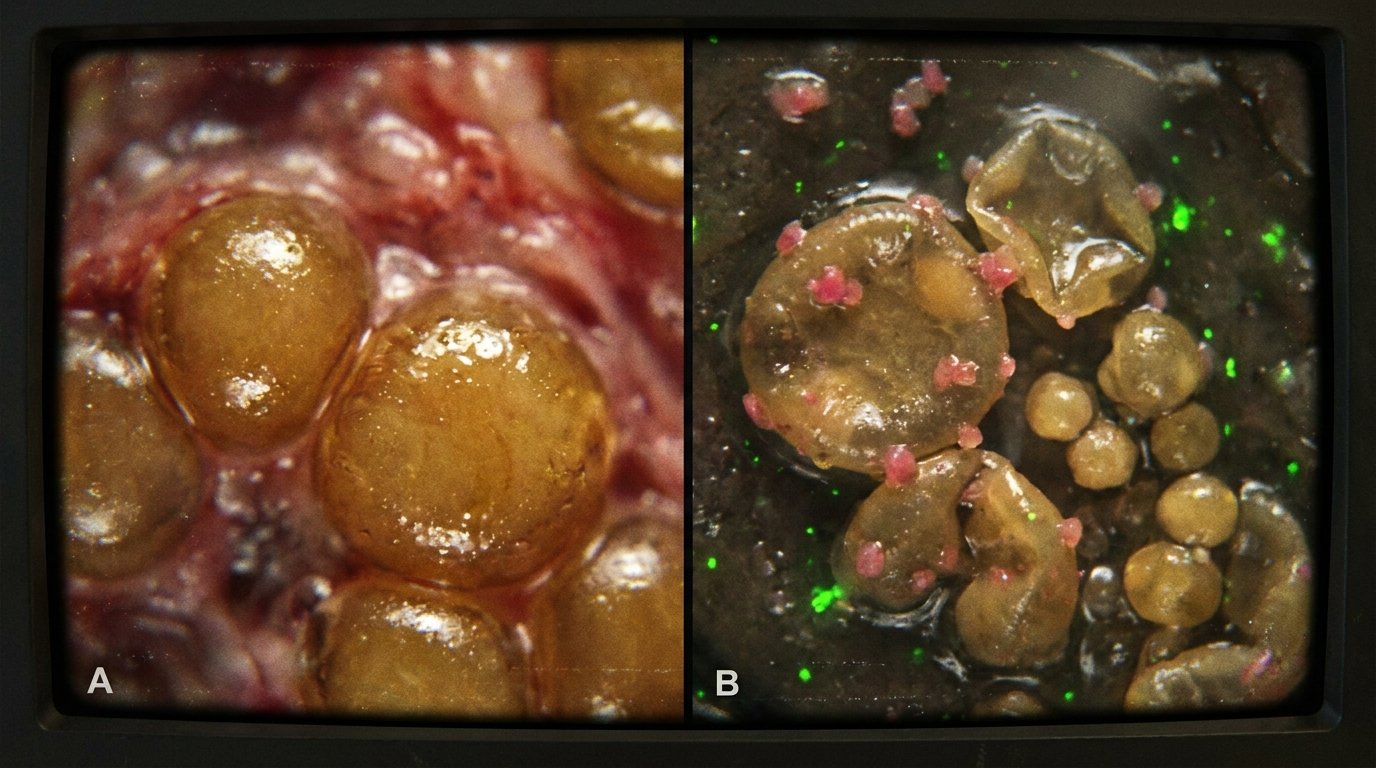
Illustration of intestinal L-cell activation — the mechanism by which certain amino acids are studied for their potential role in supporting endogenous GLP-1 and GIP secretion.
"The distinction the expert drew was important," Diane explained. "GLP-1 medications introduce a synthetic analogue from the outside. A nutritional approach aims to support the body's own production pathways from within. That difference — endogenous versus exogenous — has significant implications for side effect profiles and what happens when you stop the protocol."
Diane's Experience: A 7-Month Metabolic Protocol
Diane began the nutritional protocol with measured expectations.
"I'd explored many approaches before. I wanted to give it a fair trial — a minimum of a few weeks before drawing any conclusions."
Within the first week, she noticed a change in appetite signaling — the persistent food preoccupation that had been a feature of her daily experience began to subside.
"It was a qualitative shift that I found difficult to describe at first. The constant appetite noise that I had normalized over years became noticeably quieter. Not suppressed in a way that felt artificial — just more regulated."
Over the following months, her weight declined progressively. By week 2: approximately 9 pounds. By week 6, her clothing size had changed significantly. By month 4, she had lost 47 pounds. At month 7: 61 pounds total — and notably, without the skin laxity associated with rapid pharmaceutical weight loss.
"My physician ran a full metabolic panel at three months and again at seven months. The improvements in my metabolic markers were significant — beyond what he had anticipated from a nutritional intervention alone. He asked me to document exactly what I was doing so he could share it with other patients in similar situations."

"Seven months in. My metabolic markers improved significantly. I feel better at 52 than I did at 40." — Diane, following her nutritional protocol.
The full nutritional protocol and the science behind it are explained in detail in the free video presentation.
▶ Watch the Metabolic Analysis VideoFree · No email required
Comparing Approaches: Pharmaceutical GLP-1 vs. Nutritional Metabolic Support
| GLP-1 Receptor Agonist Medications | Nutritional Metabolic Support Protocol | |
|---|---|---|
| Monthly cost | $1,000 – $1,500 (out-of-pocket) | Under $2/day (common kitchen ingredients) |
| Mechanism | Introduces synthetic GLP-1 externally | Supports endogenous GLP-1 + GIP production |
| Documented side effects | Nausea, hair thinning, facial changes | No significant side effects reported in user population |
| Upon discontinuation | Research documents significant weight regain | Many users report sustained metabolic improvements |
| Skin integrity | Associated with skin laxity (rapid fat loss) | Collagen amino acid profile may support skin structure |
| Dependency | Requires ongoing prescription | Short-term nutritional protocol |
| Accessibility | Prescription required; subject to availability | Common household ingredients |
Other Women's Experiences With the Protocol
After Diane shared her experience in an online health community, a number of other women reported their own outcomes after following the same approach:
"I have a mobility limitation due to a leg injury that prevents regular exercise. Following this nutritional protocol, I experienced significant weight reduction without high-impact activity. My physical therapist noted the change at my next appointment."
"I was managing my blood sugar levels with medical supervision. After three months on this protocol, my A1C improved from 7.1 to 5.9 and I had lost 44 pounds. My endocrinologist adjusted my medication dosage accordingly. I always recommend consulting your doctor before making changes to any medical protocol."
"My husband and I both followed the protocol together. The shared approach made it much easier to stay consistent. We both saw meaningful results within the first month."
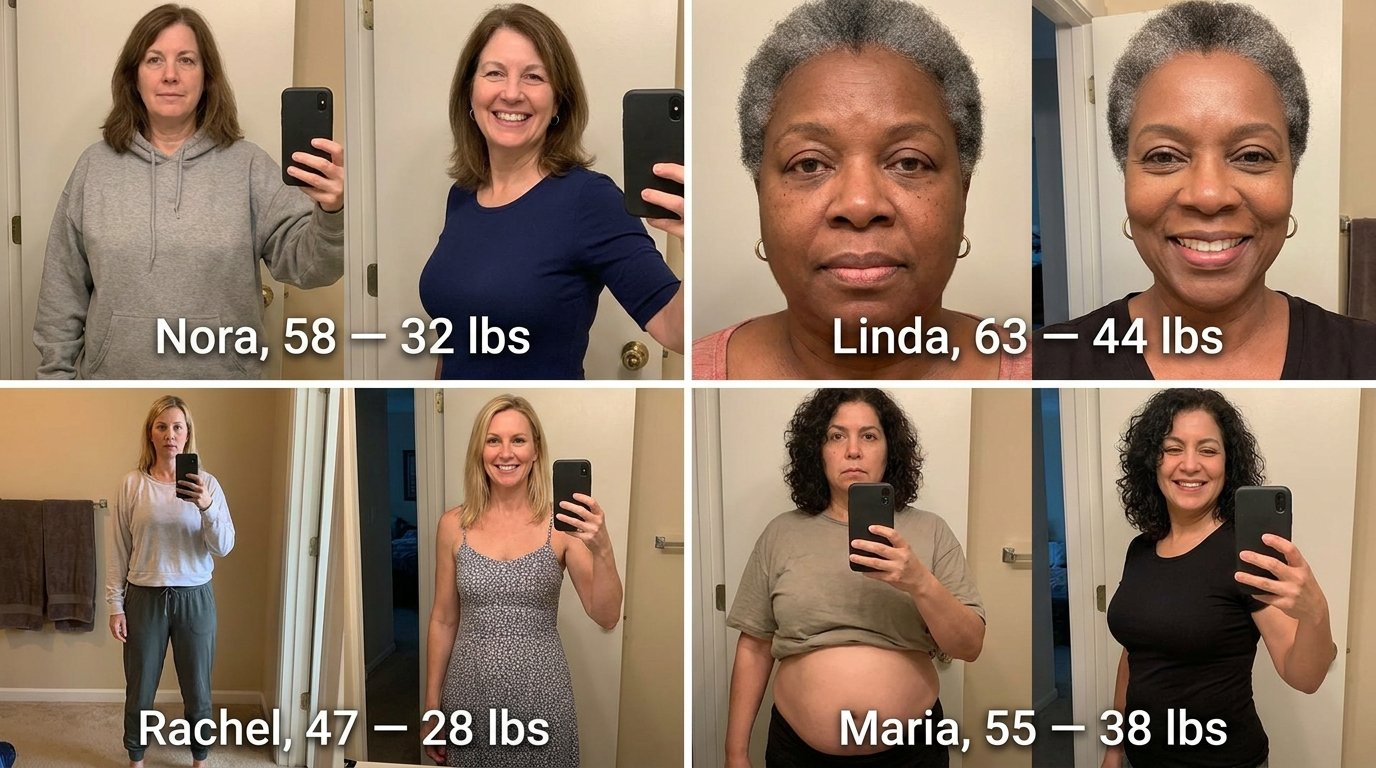
*Results may vary. Individual outcomes depend on starting weight, consistency, and overall health. Always consult your physician before beginning any new nutritional protocol.
These women all watched the same free educational presentation. The full protocol and nutritional breakdown are explained inside.
▶ Watch the Metabolic Analysis VideoNo credit card · No email required
The Broader Context: Metabolic Health Access and Pharmaceutical Economics
The GLP-1 medication market represents a significant and growing segment of the pharmaceutical industry. Manufacturers of these medications generate substantial recurring revenue from monthly treatment cycles.
Every individual who successfully supports their metabolic health through natural, sustainable approaches represents a different path — one that doesn't depend on ongoing pharmaceutical expenditure.
Meanwhile, access to affordable alternatives has become increasingly limited. Recent regulatory changes have reduced the availability of compounding pharmacies that were providing lower-cost formulations.
The Full Educational Presentation Is Available
The health and fitness expert behind this protocol has recorded a comprehensive presentation covering the complete nutritional framework, the underlying science, and a step-by-step preparation guide.
The presentation covers: the specific amino acid profile to look for, the correct mineral compound ratios, and the two additional ingredients that complete the metabolic support formula.
Diane watched it on a Tuesday evening. Seven months later, she had lost 61 pounds, improved her metabolic markers significantly, and maintained skin integrity throughout the process.
"What I appreciate most is that she explained the 'why' — the actual biology. Understanding the mechanism made it easier to stay consistent. I wasn't just following a recipe. I understood what it was doing and why."
The full protocol and scientific explanation are covered in this free educational video.
▶ Watch the Metabolic Analysis VideoNo credit card · No signup · Free educational content
Frequently Asked Questions
Is this the same collagen or gelatin supplement seen in general wellness content?
Not exactly. The specific amino acid profile and the mineral compound ratios used in this protocol are distinct from standard collagen supplements. The full formulation — including what distinguishes it from generic gelatin products — is explained in detail in the video presentation.
Should I stop taking my current medications?
Do not stop or modify any medication without consulting your physician. This is a nutritional support protocol, not a medical treatment. Many participants have followed this protocol alongside their existing medical care and reported positive outcomes. Always keep your doctor informed.
What kind of results timeline is typical?
Individual outcomes vary based on metabolic baseline, consistency, and overall health. Many participants report changes in appetite signaling within the first week. Measurable weight changes are generally reported within the first two to four weeks. Significant changes typically emerge over two to four months. Individual results will vary.
Will I experience skin laxity with this approach?
The protocol is based on amino acids — particularly glycine, proline, and hydroxyproline — that are the nutritional precursors to collagen types I and III. Many participants report maintaining skin firmness throughout their weight reduction. This contrasts with the rapid fat loss patterns associated with GLP-1 injections.
Who developed this protocol?
A nationally recognized health and fitness expert with television credentials including NBC, CBS, ABC, the Today Show, and Good Morning America. The expert's full background and credentials are shared at the beginning of the video presentation.